Peruvian Chullo Hat: History, Meaning and How It Is Made
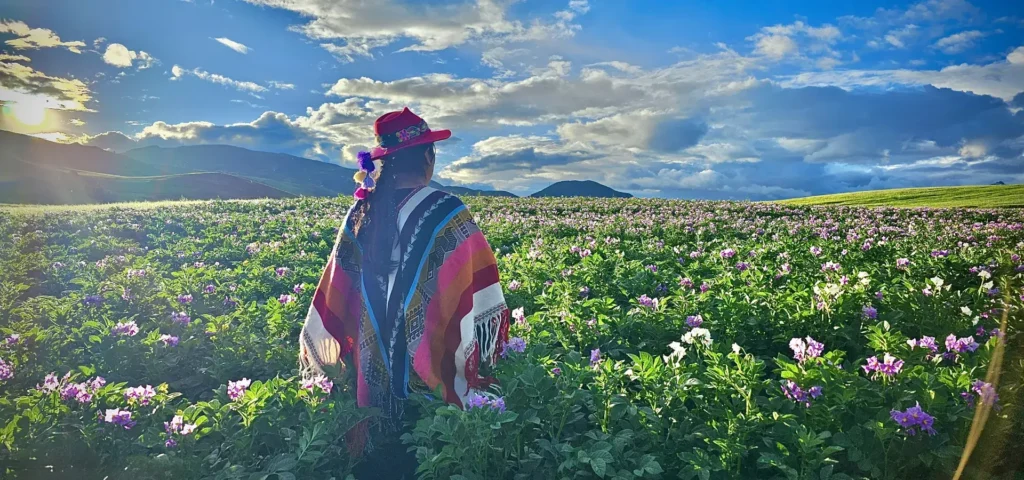
The Peruvian chullo hat is one of the most recognizable garments of the Andes. With its colorful patterns, warm wool and distinctive earflaps, the chullo is much more than a practical winter accessory. It represents generations of textile knowledge, regional identity and the creativity of Peru’s artisan communities.
For travelers, the chullo is often a memorable symbol of Peru. For Andean communities, however, it can be part of everyday clothing, ceremonial dress and local traditions. Its colors, patterns and construction may vary depending on the region, the artisan and the intended use.
This guide explains what a Peruvian chullo is, its history and cultural meaning, the materials traditionally used and the careful process involved in making one by hand.
What Is a Peruvian Chullo Hat?
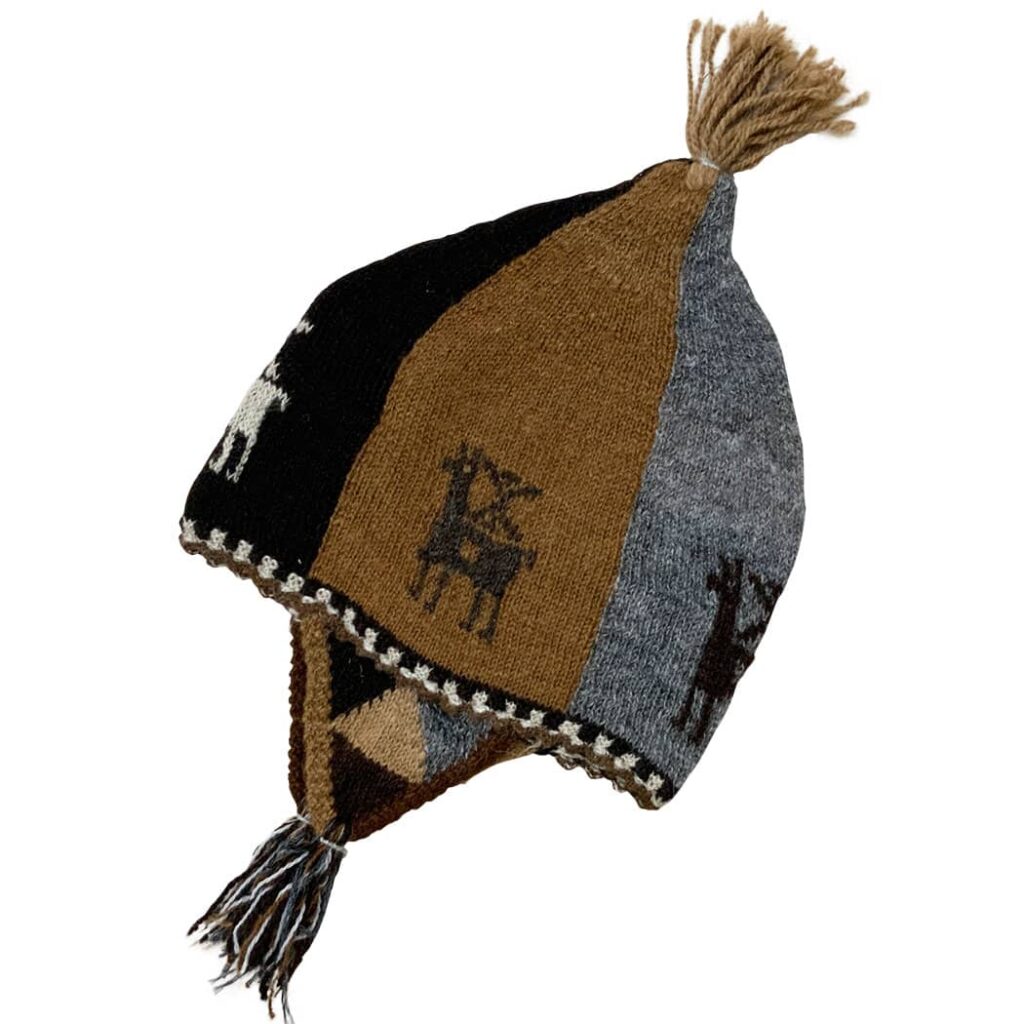
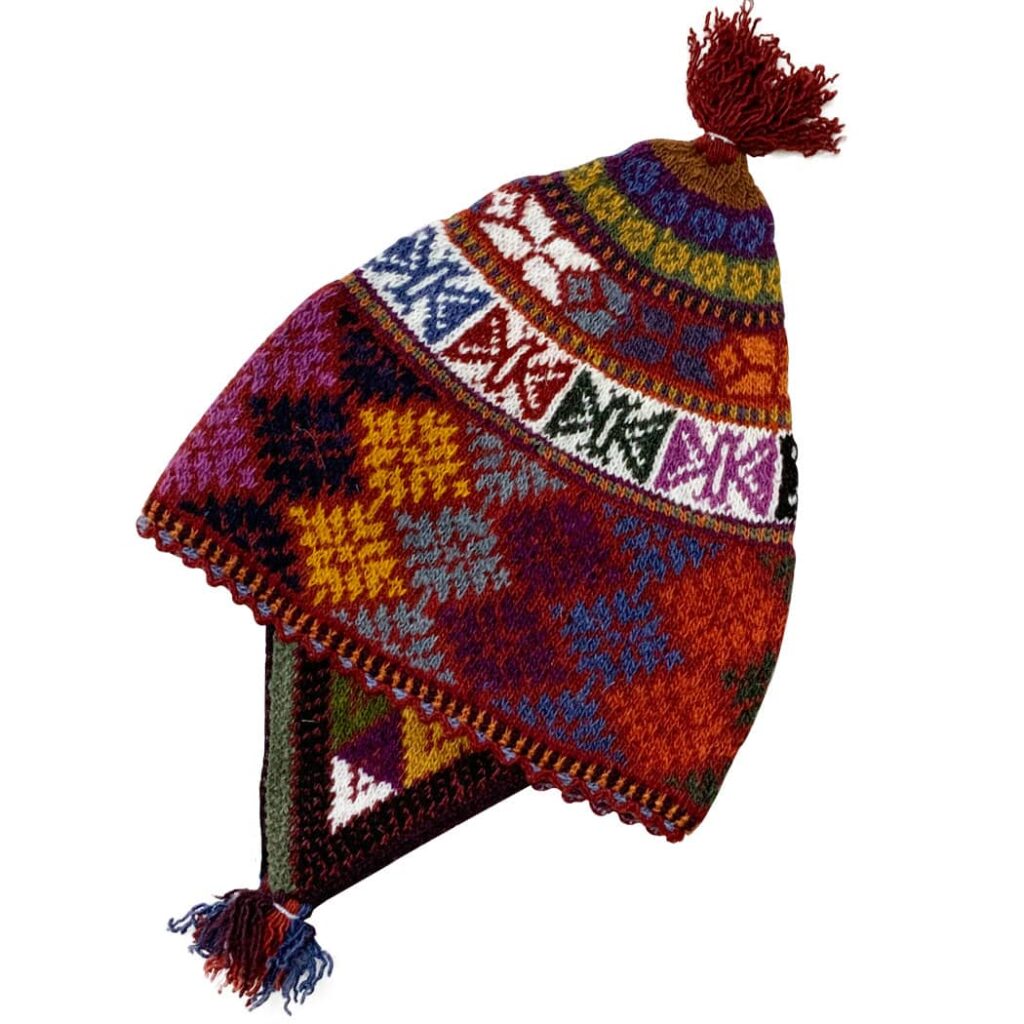
A chullo is a knitted Andean hat traditionally characterized by its earflaps. The word comes from the Quechua term ch’ullu. The Royal Spanish Academy defines it as a woolen hat with earflaps and multicolored designs, worn in the Andean regions of Peru to protect the wearer from the cold.
Its recognizable features commonly include:
- A close-fitting knitted shape.
- Two earflaps that protect the sides of the head.
- Braided cords or decorative tassels.
- Geometric, animal or nature-inspired patterns.
- Natural or brightly colored fibers.
- Wool from alpaca, sheep or other locally available sources.
The design is especially useful in the high Andes, where temperatures may fall considerably after sunset and strong winds can make the cold feel more intense.
Although chullos are now sold as fashion accessories around the world, their original purpose remains practical: keeping the head and ears warm in demanding mountain conditions.
A Quick Overview of the Peruvian Chullo
| Feature | Description |
|---|---|
| Traditional name | Chullo or ch’ullu |
| Place of use | Primarily the Peruvian Andes and other parts of the Andean region |
| Main characteristic | Knitted hat with earflaps |
| Common materials | Alpaca wool, sheep wool and blended fibers |
| Main purpose | Protection from cold temperatures and mountain winds |
| Typical decoration | Geometric figures, animals, plants, mountains and regional motifs |
| Production method | Hand knitting or artisanal textile techniques |
| Cultural value | Regional identity, textile knowledge and community tradition |
The History of the Peruvian Chullo
The history of the chullo cannot be reduced to a single date or place. Head coverings have been used in the Andes for centuries, and textile traditions existed long before the arrival of Europeans.
Over time, Andean communities developed different forms of hats and knitted garments suited to their climates, materials and cultural customs. The modern chullo reflects this long history of cultural exchange and local adaptation.
Some historians have connected elements of its shape to European caps introduced during the colonial period. However, its materials, decorative language, earflaps and regional variations were developed within the cultural and environmental context of the Andes.
For that reason, the chullo is best understood as an evolving Andean garment rather than a product with one simple origin story.
Ancient Textile Traditions in the Andes
Textile production has long played an important role in Andean society. Fibers were not only used to create practical clothing but also to communicate identity, social relationships, community membership and artistic knowledge.
A particularly important example is the textile tradition of Taquile Island, located in Lake Titicaca in southern Peru. UNESCO explains that Taquile’s weaving tradition preserves elements associated with the ancient Inca, Pukara and Colla civilizations. Textile production remains part of everyday community life and is practiced by both men and women.
UNESCO identifies the chullo as one of Taquile’s characteristic garments and inscribed the island’s textile art on the Representative List of the Intangible Cultural Heritage of Humanity in 2008.
This does not mean that every Peruvian chullo comes from Taquile. Chullos are produced in many areas of Peru, and every community may have its own techniques, materials and visual traditions. Taquile simply provides one of the best-known examples of the deep cultural importance of Andean textiles.
What Does a Chullo Represent?
A Peruvian chullo may represent several things at the same time:
- Protection from the Andean climate.
- Membership in a community or region.
- Knowledge passed between generations.
- The skill and creativity of an artisan.
- A connection with local animals, landscapes and traditions.
- Pride in Peruvian and Andean culture.
In some communities, colors, patterns or the way a garment is worn can communicate social or cultural information. In others, the design may be primarily decorative or chosen according to the artisan’s personal style.
It is therefore important not to assume that every symbol has the same meaning throughout Peru. A diamond, bird, flower or mountain pattern can have different interpretations depending on its place of origin.
Is every chullo design symbolic?
Not necessarily. Some designs are connected with local traditions, while others are modern combinations created for contemporary customers.
Authentic craftsmanship does not require every pattern to carry an ancient or ceremonial meaning. Artisans continually adapt their work, combine traditional elements and create new designs while preserving the knowledge of knitting and textile production.
Why Does the Chullo Have Earflaps?
The earflaps are one of the most practical parts of the chullo. They provide additional protection for areas that are easily exposed to cold air and wind.
Depending on the design, the earflaps may:
- Cover the ears completely.
- Extend toward the jaw.
- Include braided cords that can be tied beneath the chin.
- Finish with tassels, pompoms or decorative fringes.
- Add structure and visual balance to the hat.
This feature makes the chullo particularly suitable for mountain environments, outdoor activities and cold winter weather.
What Materials Are Used to Make a Chullo?
Peruvian chullos can be made from several different fibers. The material affects the hat’s warmth, softness, weight, texture, durability and price.
Alpaca wool
Alpaca fiber is one of Peru’s most internationally recognized natural materials. It can produce warm, lightweight and comfortable garments.
An alpaca chullo may feel softer than one made with some types of sheep wool, although the final texture also depends on fiber quality, processing and construction.
Sheep wool
Sheep wool is widely used in Andean textile production. It is warm, durable and often gives a chullo a more traditional or rustic texture.
It can also be easier to dye in strong colors and may be more affordable than high-quality alpaca fiber.
Llama fiber
Llama fiber may be used in some garments, although it is generally coarser than fine alpaca fiber. Its characteristics can vary depending on the animal, fiber selection and production process.
Blended fibers
Some chullos combine natural wool with acrylic or other synthetic fibers. Blends can make a hat more affordable, easier to wash or more resistant to everyday use.
A blended chullo is not automatically a poor-quality product. The important point is that the seller clearly identifies its composition instead of presenting a mixed product as pure alpaca.
Comparison of Common Chullo Materials
| Material | Warmth | Softness | Weight | Typical appearance | Price range |
|---|---|---|---|---|---|
| Fine alpaca | High | Very soft | Light | Smooth and refined | Higher |
| Regular alpaca | High | Soft to medium | Light | Natural and warm | Medium to high |
| Sheep wool | High | Medium or rustic | Medium | Traditional and textured | Medium |
| Llama fiber | Medium to high | Usually coarser | Medium | Firm and natural | Varies |
| Natural-synthetic blend | Medium | Varies | Light to medium | Consistent and colorful | More affordable |
| Acrylic | Medium | Usually soft | Light | Bright and uniform | Lower |
The quality of a chullo should not be judged by fiber alone. Good stitching, comfortable construction, honest labeling and careful finishing are equally important.
How Is a Peruvian Chullo Made?
The exact process varies between artisans and communities, but a handmade chullo generally passes through several stages.
1. Selecting the Fiber
The artisan first chooses the material according to the desired style, warmth and texture.
The fiber may come from alpaca, sheep or a blend. In some cases, the artisan works with locally sourced and hand-spun yarn. In others, prepared yarn is purchased from regional suppliers.
The selection process may consider:
- Fiber softness.
- Thickness.
- Natural color.
- Strength.
- Intended use.
- Available budget.
- Whether the chullo will be worn by an adult or child.
2. Cleaning and Preparing the Fiber
When raw natural fiber is used, it must be cleaned to remove dust, plant matter and other impurities.
The fiber may then be separated, aligned and prepared for spinning. Careful preparation helps create a more consistent thread and improves the final texture of the garment.
3. Spinning the Yarn
The prepared fiber is twisted into yarn by hand or with simple spinning tools. This step requires experience because the thickness of the yarn affects the appearance and structure of the chullo.
A thicker yarn can create a heavier, warmer hat, while finer yarn allows the artisan to produce more detailed patterns.
4. Dyeing the Yarn
The yarn may be used in its natural color or dyed before knitting.
Natural alpaca and sheep fibers are available in shades such as:
- White.
- Cream.
- Beige.
- Brown.
- Gray.
- Black.
Artisans may also use dyed yarn in red, blue, green, orange, yellow, purple and other colors.
Depending on the maker, colorants may come from natural or commercial dyes. Natural dyeing may use plants, roots, bark, insects or minerals, but not every handmade chullo is naturally dyed. Buyers should check the product description when this characteristic is important to them.
5. Planning the Design
Before knitting begins, the artisan chooses the shape, color combination and decorative pattern.
Some artisans follow designs learned from relatives or community members. Others develop new combinations for modern customers.
Common sources of inspiration include:
- Mountains and agricultural landscapes.
- Llamas and alpacas.
- Birds and other local animals.
- Flowers and plants.
- Geometric forms.
- Community celebrations.
- Traditional Andean color combinations.
- Contemporary fashion trends.
6. Knitting the Main Section
The body of the chullo is usually knitted from the crown downward or from the lower edge upward, depending on the artisan’s technique.
The maker must maintain consistent tension so that the hat is neither too loose nor uncomfortably tight.
When the design contains multiple colors, the artisan changes yarn carefully while keeping the inside of the garment neat and comfortable.
7. Creating the Earflaps
The earflaps may be knitted as part of the main structure or added during a later stage.
They must be positioned evenly so that the finished chullo sits correctly on the head. Uneven earflaps can affect both comfort and appearance.
8. Adding Braids, Tassels or Pompoms
Many chullos include decorative elements such as:
- Braided cords.
- Small tassels.
- Fringes.
- Pompoms.
- Knotted ends.
- Multicolored yarn decorations.
These details may be functional, decorative or both. Long cords can help secure the hat, while tassels and pompoms give it a distinctive Andean appearance.
9. Finishing and Quality Control
The artisan completes the garment by securing loose threads, checking the seams and correcting any irregular areas.
A well-finished chullo should have:
- Secure stitching.
- Balanced earflaps.
- Comfortable edges.
- Consistent tension.
- Neatly attached decorative elements.
- No large gaps in the knitting.
- A shape that fits the head naturally.
Because handmade products are created individually, small variations are normal. These differences are often part of their character rather than defects.
How Long Does It Take to Make a Handmade Chullo?
There is no universal production time. A simple chullo may be completed relatively quickly, while a detailed piece with fine yarn, multiple colors and complex patterns requires considerably more work.
Production time depends on:
- The complexity of the design.
- The thickness of the yarn.
- The artisan’s experience.
- Whether the yarn is hand-spun.
- Whether the fiber is naturally dyed.
- The number of decorative details.
- The size of the hat.
A handmade chullo should therefore be valued not only for its raw material but also for the time, knowledge and attention involved in making it.
Regional Differences in Peruvian Chullos
There is no single design that represents every chullo in Peru. Styles can differ between Puno, Cusco, Arequipa and other Andean areas.
Regional differences may appear in:
- Shape and length.
- Earflap construction.
- Color combinations.
- Yarn thickness.
- Knitting density.
- Decorative symbols.
- Use of pompoms or tassels.
- Traditional versus contemporary designs.
Some chullos are made primarily for daily use in rural areas. Others are ceremonial, decorative or designed for travelers and international markets.
This diversity is one of the reasons the chullo remains such an interesting expression of Peruvian textile culture.
Traditional Chullo vs Modern Chullo
| Traditional or community style | Contemporary commercial style |
|---|---|
| Often connected with a particular area | Designed for a wider international audience |
| May use locally recognized colors and patterns | May use modern or minimalist combinations |
| Frequently made for community use | Frequently made as a fashion accessory |
| Can communicate local identity | Usually emphasizes comfort and appearance |
| May use hand-spun or locally sourced yarn | May use prepared yarn or blended fibers |
| Shape may follow regional customs | Shape may be adapted to common international sizes |
Neither category is automatically more valuable. A modern handmade chullo can still support artisans and preserve textile skills. What matters is transparency about where, how and by whom the product was made.
How to Recognize a Quality Handmade Chullo
Before purchasing a chullo, examine the product description and available photographs carefully.
Look for the following details:
Clear material information
The seller should indicate whether the product is made from alpaca, sheep wool, acrylic or a blend.
Be cautious with vague descriptions such as “Andean wool” when no fiber composition is provided.
Consistent knitting
Handmade work can contain small natural variations, but the overall structure should be strong and balanced.
Comfortable interior
The inside should not contain long, loose threads that could catch on hair or create discomfort.
Secure decorations
Braids, tassels and pompoms should be firmly attached.
Information about the maker
Whenever possible, choose sellers who explain where the product was made and how they work with artisans.
Honest use of the word “handmade”
Some products are fully handmade, while others combine machine-made components with hand finishing. Both can be useful, but the description should be accurate.
Why Buy a Handmade Peruvian Chullo?
Buying a handmade chullo can offer several advantages:
- Each item may have small, unique variations.
- Traditional textile knowledge receives economic value.
- Buyers obtain a product connected with its place of origin.
- Handmade production can support artisan families and communities.
- Natural fibers can provide excellent warmth and comfort.
- The product can last for years when properly cared for.
However, buyers should avoid assuming that every product marketed as “Peruvian” directly benefits local artisans. Responsible purchasing requires checking the seller’s sourcing, material descriptions and production information.
How to Wear a Peruvian Chullo
A chullo can be worn both as a cultural garment and as a practical winter accessory.
It works well with:
- Wool coats.
- Outdoor jackets.
- Sweaters.
- Scarves.
- Hiking clothing.
- Neutral winter outfits.
- Casual jeans and boots.
- Other handmade Andean accessories.
A colorful chullo can become the central element of an outfit. A neutral alpaca chullo in beige, brown or gray may be easier to combine with everyday clothing.
How to Care for an Alpaca or Wool Chullo
Always follow the care instructions supplied with the product. When no instructions are available, gentle hand washing is usually the safest option for natural wool garments.
General care recommendations include:
- Fill a container with cold or lukewarm water.
- Add a small amount of gentle wool detergent.
- Submerge the chullo without rubbing it aggressively.
- Rinse carefully with water at a similar temperature.
- Press out excess water without twisting.
- Place the hat flat on a clean towel.
- Reshape it gently.
- Allow it to dry away from direct heat and strong sunlight.
Avoid hanging a wet chullo by its earflaps because the weight of the water can stretch the garment.
Frequently Asked Questions About Peruvian Chullo Hats
What is a Peruvian chullo?
A Peruvian chullo is a knitted Andean hat with earflaps. It is traditionally worn to protect the head and ears from cold temperatures and mountain winds.
What does the word chullo mean?
The Spanish word chullo comes from the Quechua term ch’ullu. It generally refers to a knitted hat with earflaps used in the Andes.
Is the chullo originally from Peru?
The chullo is strongly associated with Peru and is widely used in the Peruvian Andes. Similar earflap hats are also found in other parts of the Andean region. Its history reflects a combination of long-standing Andean textile traditions and cultural changes over time.
Are all Peruvian chullos handmade?
No. Some chullos are completely handmade, while others are machine knitted, mass produced or only finished by hand. Read the product description carefully before purchasing.
Are all chullos made from alpaca wool?
No. Chullos can be made from alpaca, sheep wool, llama fiber, acrylic or mixed materials.
Is alpaca better than sheep wool for a chullo?
Alpaca is often valued for being warm and lightweight, while sheep wool can be durable, insulating and more affordable. The best choice depends on sensitivity, climate, budget and personal preference.
Why do chullos have earflaps?
The earflaps protect the ears and sides of the face from cold air and mountain winds. Some have cords that can be tied beneath the chin for additional security.
Do chullo colors have a meaning?
They can, but meanings vary between communities and regions. Some combinations reflect local identity or traditions, while others are selected for decoration or modern fashion. There is no universal dictionary that applies to every Peruvian chullo.
Can men and women wear a chullo?
Yes. Many chullos are unisex. The most important considerations are size, fit, material and preferred design.
Can children wear chullos?
Yes. Chullos are available for babies and children, but buyers should choose an appropriate size and check that cords, tassels and small decorations are safe for the child’s age.
Are chullos suitable for very cold weather?
A thick natural-wool chullo can provide excellent warmth, particularly when it fits closely and covers the ears. Performance depends on the fiber, thickness, knitting density and weather conditions.
Can I wear a chullo for hiking or skiing?
Yes, provided it fits comfortably and does not interfere with helmets or other safety equipment. For technical outdoor activities, warmth, moisture management and compatibility with protective gear should come before appearance.
How should a chullo fit?
It should fit securely around the head without creating uncomfortable pressure. The earflaps should cover the ears, and the crown should not leave large gaps through which cold air can enter.
How can I tell whether a chullo is authentic?
Look for transparent information about the place of production, artisan, materials and manufacturing method. Authenticity is not determined by bright colors alone.
Is a handmade chullo a good gift?
Yes. A handmade chullo can be a practical and meaningful gift for people interested in winter clothing, Peruvian culture, natural fibers or artisan products.
How do I wash an alpaca chullo?
Hand wash it gently in cold or lukewarm water using a wool-safe detergent. Do not twist it, and dry it flat after carefully restoring its shape.
Can a chullo shrink?
Natural wool can shrink when exposed to hot water, sudden temperature changes, aggressive rubbing or machine drying. Gentle washing helps preserve its original size.
Why are handmade chullos more expensive?
Their price may reflect the quality of the fiber, preparation of the yarn, complexity of the pattern, hours of work and skill of the artisan.
Is every colorful earflap hat a traditional chullo?
Not necessarily. Many international winter hats imitate the chullo’s shape. A genuine Peruvian chullo should have a documented connection with Peruvian production, artisans or textile traditions.
The Peruvian chullo hat is more than a colorful souvenir. It is a functional garment shaped by the cold Andean environment and by generations of textile knowledge.
Its earflaps provide warmth, its patterns express creativity, and its handmade construction reflects the patient work of artisans. At the same time, the chullo continues to evolve. Traditional community garments coexist with modern designs created for travelers, winter fashion and international customers.
Choosing a handmade Peruvian chullo means paying attention to more than appearance. Material composition, production methods, origin and the relationship between the seller and the artisan all matter.
At Sacred Loom Peru, we celebrate the knowledge and creativity behind Peruvian handmade textiles. Explore our collection of authentic Andean products and discover pieces created with care, cultural inspiration and respect for Peru’s artisan traditions.